

What is Neurofibromatosis Type 2?
Neurofibromatosis Type 2 (NF2) is a rare genetic neurological disorder characterized by the development of multiple tumors of the nervous system, most commonly affecting the brain and spinal cord. These tumors are usually benign, but they can cause significant neurological symptoms due to their location and growth.
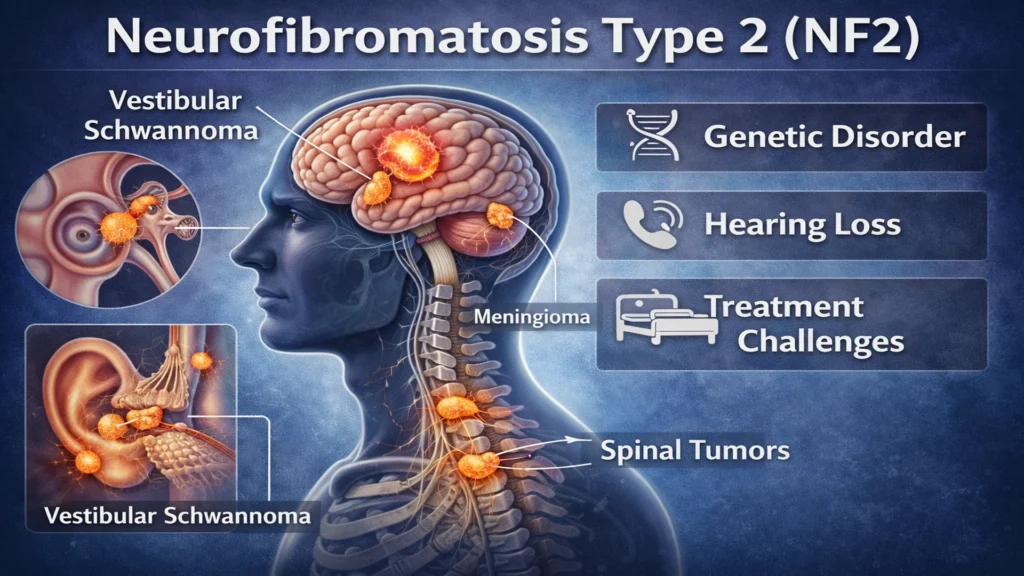
The hallmark feature of NF2 is the presence of bilateral vestibular schwannomas — tumors that develop on both vestibular (hearing and balance) nerves. NF2 is a lifelong condition that requires careful monitoring and long-term medical management.
How NF2 develops
NF2 is caused by a mutation in the NF2 gene, which is responsible for producing a protein that helps regulate cell growth. When this gene does not function properly, cells may grow uncontrollably, leading to tumor formation.
The condition follows an autosomal dominant inheritance pattern, meaning that a person can develop NF2 if they inherit a single altered gene from one parent. However, many cases arise from a new (spontaneous) genetic mutation, with no prior family history.
Common tumors associated with NF2
People with NF2 may develop multiple types of tumors, including:
- Vestibular schwannomas (affecting hearing and balance nerves)
- Meningiomas (tumors arising from the membranes covering the brain and spinal cord)
- Spinal schwannomas
- Ependymomas of the spinal cord
Although these tumors are usually non-cancerous, their growth within confined spaces of the nervous system can lead to progressive neurological symptoms.
Symptoms of NF2
Symptoms vary widely depending on tumor type, size, and location. Early symptoms often involve hearing and balance disturbances, such as gradual hearing loss, tinnitus (ringing in the ears), or problems with balance.
As the condition progresses, patients may experience facial weakness, numbness, visual disturbances, headaches, or limb weakness. Spinal tumors can cause back pain, sensory changes, or difficulties with walking.
Symptoms often develop gradually, and their severity can differ significantly even among members of the same family.
How NF2 is diagnosed
Diagnosis is based on a combination of clinical findings, imaging studies, and genetic testing. MRI of the brain and spine plays a central role in detecting tumors associated with NF2, often before symptoms become severe.
Genetic testing can confirm the diagnosis and may be helpful for family counseling and long-term planning.
Early diagnosis allows for structured surveillance and timely intervention, which can significantly influence long-term outcomes.
Management and treatment approach
There is currently no cure for NF2, but effective management focuses on monitoring tumor growth and treating symptoms as they arise.
Treatment strategies are highly individualized and may include:
- Regular imaging surveillance
- Hearing preservation strategies and auditory rehabilitation
- Surgical removal of tumors when they cause significant symptoms or rapid growth
- Targeted therapies in selected cases
- Supportive therapies such as physical or balance rehabilitation
The goal of treatment is to preserve neurological function, hearing, and quality of life while minimizing treatment-related risks.
Long-term outlook
NF2 is a chronic condition that requires lifelong follow-up. Advances in imaging, microsurgery, and supportive care have significantly improved outcomes over time.
Prognosis depends on tumor burden, growth patterns, and response to treatment. With careful monitoring and a coordinated care approach, many individuals with NF2 maintain functional independence for many years.
When to seek medical evaluation urgently
Immediate medical assessment is recommended if new or rapidly worsening symptoms occur, such as sudden hearing loss, facial weakness, difficulty swallowing, severe headaches, new balance problems, or limb weakness. These changes may indicate tumor progression or complications requiring prompt attention.
FAQ
NF2 is a genetic disorder that causes multiple benign tumors to develop in the brain, spinal cord, and peripheral nerves, most commonly affecting hearing and balance nerves.
No. NF2 is a distinct condition with different genetic causes, tumor types, and clinical features. It primarily affects the nervous system rather than the skin.
NF2 can be inherited from a parent, but many cases result from a new genetic mutation with no family history.
Most tumors associated with NF2 are benign. However, their location can still cause serious neurological symptoms.
There is no cure, but careful monitoring and treatment can control symptoms and slow disease progression.
Hearing loss is common due to tumors affecting the vestibular nerves. Hearing may decline gradually, and specialized rehabilitation options can help manage communication challenges.
Regular MRI scans and neurological evaluations are essential. The frequency depends on tumor activity, age, and symptom progression.


