

What is symptomatic treatment?
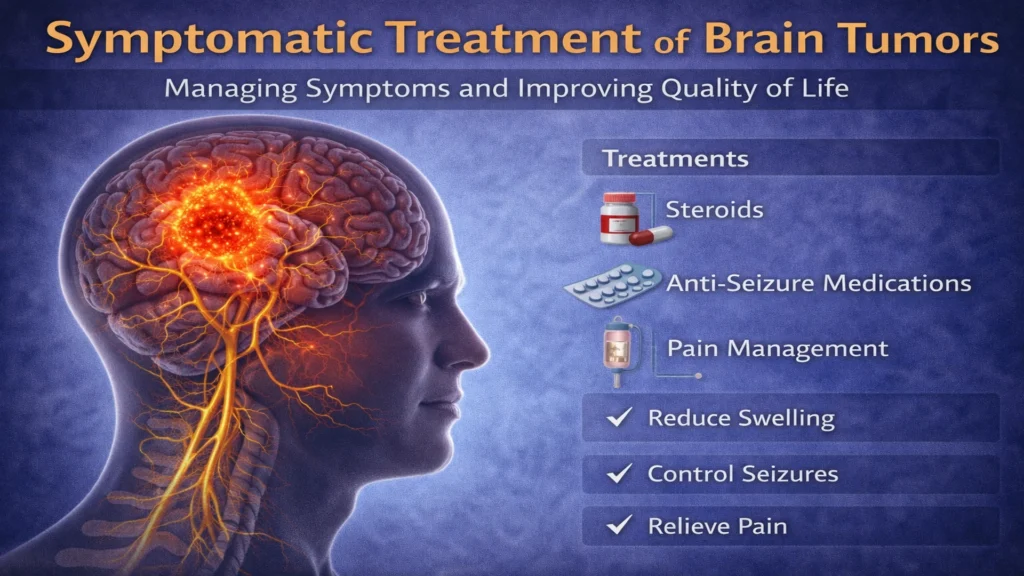
Symptomatic treatment of brain tumors focuses on relieving symptoms caused by the tumor and its effects on the brain, rather than directly removing or destroying the tumor itself. This approach plays a critical role in improving comfort, daily functioning, and overall quality of life.
Symptomatic care may be used at any stage of the disease — before surgery, alongside tumor-directed treatment, after definitive therapy, or when curative treatment is not possible or not appropriate.
Why symptomatic treatment is important
Brain tumors can cause symptoms through direct pressure on brain tissue, disruption of normal brain function, and secondary effects such as swelling (edema), increased intracranial pressure, seizures, and neurological deficits.
Even benign tumors may cause significant symptoms due to the limited space inside the skull. Symptomatic treatment helps reduce these effects and supports the patient’s physical and neurological stability.
Common symptoms and their management
Headache and increased intracranial pressure
Headaches related to brain tumors often result from swelling or pressure. Medications may be used to reduce brain edema and relieve pressure, leading to significant symptom improvement.
Seizures
Tumor-related seizures are common and require antiepileptic therapy to stabilize abnormal electrical activity in the brain and prevent recurrent episodes.
Nausea and vomiting
These symptoms may occur due to increased intracranial pressure or irritation of specific brain regions. Supportive medications help control nausea and allow adequate nutrition and hydration.
Neurological deficits
Depending on tumor location, patients may experience weakness, sensory changes, speech difficulties, or coordination problems. Symptomatic management may include medications, rehabilitation therapies, and supportive care to maintain independence.
When symptomatic treatment is the primary approach
In some situations, symptomatic treatment becomes the main focus of care. This may occur when:
- the tumor cannot be safely removed
- disease is advanced or progressive
- the risks of surgery or radiation outweigh potential benefits
- the primary goal is comfort and quality of life
In these cases, care is centered on pain control, seizure prevention, reduction of swelling, and preservation of neurological function.
Role in comprehensive care
Symptomatic treatment is rarely isolated. It usually complements other treatment strategies:
- before surgery, to stabilize the patient
- during radiation or systemic therapy, to reduce side effects
- after tumor-directed treatment, if symptoms persist
- as part of supportive or palliative care
A multidisciplinary approach ensures that both the disease and its impact on daily life are addressed.
When to seek urgent medical attention
Immediate evaluation is required if symptoms:
- worsen suddenly or rapidly
- include severe headaches, repeated vomiting, or confusion
- involve new neurological deficits such as weakness, vision changes, or speech difficulties
- include uncontrolled or new-onset seizures
Prompt assessment allows timely adjustment of treatment and prevention of complications.
FAQ — Symptomatic Treatment of Brain Tumors
It refers to medical care aimed at reducing symptoms caused by a brain tumor rather than treating the tumor itself.
No. It does not eliminate the tumor but helps improve comfort and daily functioning.
No. It can be used at any stage, including before and after definitive treatment.
Yes. Some symptoms may persist or recur and require ongoing symptomatic management.
They overlap, but symptomatic treatment may be part of both active treatment plans and palliative care, depending on the situation.


