

What is a brain tumor?
A brain tumor is a group of cells that grow abnormally in the brain or nearby areas. Tumors can be benign, meaning not cancer, or malignant, meaning cancer. Even non-cancerous tumors can cause problems because the skull is a closed space, so any growth can press on brain tissue, nerves, or blood vessels.
It is important to understand that the term “brain tumor” describes a wide group of conditions, not a single disease. Tumors differ significantly in their biological behavior, growth rates, locations, and responses to treatment.
Symptoms of a brain tumor
The symptoms of a brain tumor mostly depend on where it is in the brain and how it affects nearby areas. Whether the tumor is cancerous or not does not always change the symptoms.
Common symptoms include persistent or worsening headaches, especially those that are unusual for the patient or become more intense over time. Headaches may be accompanied by nausea or vomiting and may not respond to usual pain medication.
Seizures are also common and can sometimes happen for the first time in adults. They might look like shaking, brief blackouts, odd feelings, or sudden movements you can’t control.
Other symptoms can be weakness or numbness in your face or arms and legs, trouble with balance or coordination, changes in vision or speech, or problems with memory, focus, or personality. Some tumors grow slowly and cause symptoms over time, while others can cause changes more quickly.
Sometimes, especially early on, a brain tumor might not cause any symptoms and is only found by accident during a scan for something else.
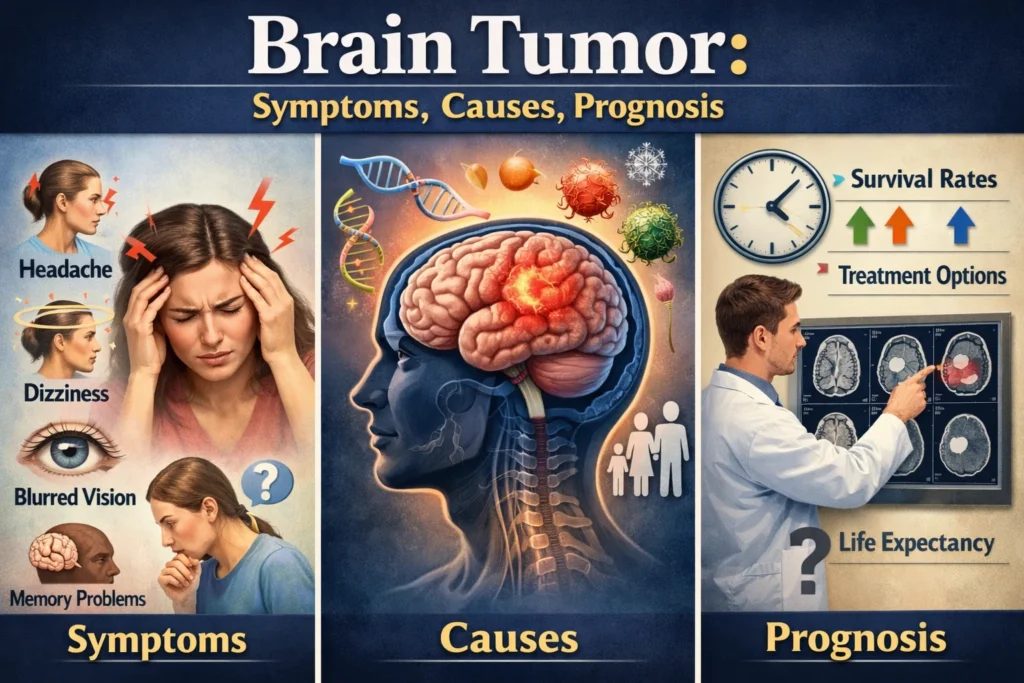
Causes of brain tumors
Most of the time, doctors do not know exactly what causes a brain tumor. Tumors form when cells start to grow unusually because of changes in the cells or genes.
Some people have inherited genetic conditions that raise their risk of brain tumors, but this is rare. Having had high doses of radiation to the head in the past is also a known risk factor.
There is no good evidence that stress, diet, cell phone use, or daily habits directly cause brain tumors. People should not blame themselves if they are diagnosed.
Doctors usually start by checking your nervous system and asking about your medical history. They use scans like MRI or CT to find out if there is a tumor, how big it is, and where it is located.
Often, doctors need to look at a sample of the tumor under a microscope, which they get during surgery or a biopsy. This helps them figure out the type and grade of the tumor, which is important for planning treatment and understanding the outlook.
Prognosis
How a brain tumor will affect someone depends on many things, like the type, grade, size, and location of the tumor, and whether it can be fully removed. A person’s age, overall health, and how they respond to treatment also matter.
Some brain tumors grow slowly and can be managed well with surgery and regular check-ups. Others need a mix of treatments, such as surgery, radiation, and sometimes chemotherapy.
It’s important to remember that each person’s outlook is unique. Statistics show trends for groups, but they cannot say exactly what will happen to one person.
Treatment approach
Doctors always adjust treatment to fit each patient. Surgery is often the first choice, especially if the tumor can be removed safely.
Radiation may be suggested after surgery or if surgery is not an option. Chemotherapy or other treatments are used in certain cases, depending on the type of tumor.
The aim of treatment is not just to control the tumor, but also to keep brain function and quality of life as good as possible.
When to seek urgent medical attention
You should get medical help right away if symptoms start suddenly or get worse quickly. These include very bad or ongoing headaches, new seizures, sudden weakness or numbness, changes in vision or speech, confusion, or passing out.
Getting checked quickly can help prevent problems and make sure treatment starts as soon as possible.
FAQ
A brain tumor is a group of cells growing abnormally in the brain or nearby areas. It can be non-cancerous or cancerous and may affect how the brain works by pressing on nearby tissue.
No. Many brain tumors are not cancer, but even non-cancerous tumors can cause symptoms depending on where they are.
Common symptoms are headaches, seizures, weakness, numbness, trouble with balance, changes in vision or speech, and changes in thinking or behaviour.
Most of the time, the cause is not known. Some genetic factors and having had radiation to the head in the past can raise the risk.
No. There No. There is no proof that stress or lifestyle choices directly cause brain tumors.rain tumor always grow quickly?
No. Some tumors grow very slowly over many years, while others can get worse more quickly.
Things like the type, grade, location, and size of the tumor, the treatment options, and the person’s overall health all affect the outlook.


