

What is glioblastoma?
Glioblastoma is the most aggressive primary malignant tumor of the brain. It develops from glial cells and is classified as a high-grade glioma. Glioblastoma grows rapidly and infiltrates surrounding brain tissue, which makes treatment complex and requires a multidisciplinary approach.
This type of tumor can affect adults of any age but is most commonly diagnosed in middle-aged and older individuals. Despite its aggressive nature, treatment focuses on extending survival, preserving neurological function, and maintaining quality of life.
How glioblastoma develops
Glioblastoma arises from abnormal glial cells that begin to grow uncontrollably. Unlike many other tumors, glioblastoma does not form clear boundaries and tends to spread microscopically into nearby brain tissue.
The exact cause of glioblastoma is unknown. In most cases, it occurs sporadically and is not inherited. Known risk factors are limited, and the disease is not linked to lifestyle or environmental exposure in the majority of patients.
Common symptoms
Symptoms depend on tumor location, size, and rate of growth. Because glioblastoma grows quickly, symptoms often progress over weeks or months.
Common manifestations include persistent headaches, seizures, weakness or numbness in the limbs, speech difficulties, vision changes, cognitive decline, personality changes, and problems with coordination or balance.
Symptoms may initially be subtle and gradually worsen as the tumor grows.
Diagnosis
Diagnosis begins with neurological evaluation and imaging studies. MRI of the brain is the primary diagnostic tool and provides detailed information about tumor size, location, and characteristics.
Definitive diagnosis requires histological confirmation obtained through biopsy or surgical removal of tumor tissue. Molecular and genetic analysis of the tumor may also be performed to help guide treatment decisions and prognosis.
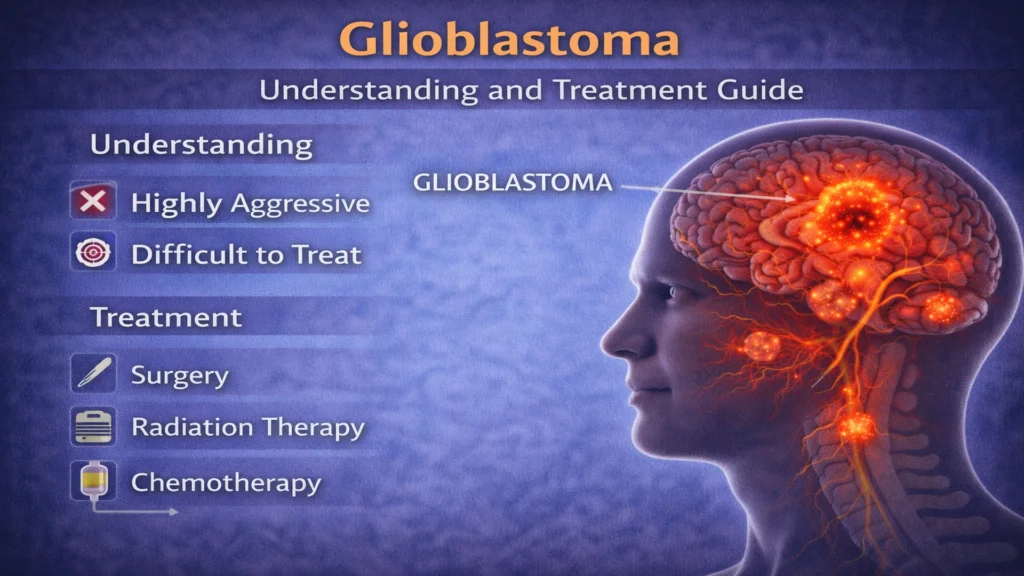
Treatment approach
Treatment of glioblastoma is complex and individualized. It usually involves a combination of several modalities.
Surgical treatment
The first step is often maximal safe surgical removal of the tumor. Complete removal is rarely possible due to the infiltrative nature of glioblastoma, but surgery helps reduce tumor burden and relieve pressure on the brain.
Radiation therapy
Radiation is commonly used after surgery to target remaining tumor cells and slow disease progression.
Systemic therapy
Medications are used alongside radiation or afterward to help control tumor growth.
Supportive and symptomatic care
Management of seizures, swelling, pain, and neurological symptoms is essential throughout treatment.
Prognosis
Glioblastoma is a serious diagnosis, and prognosis varies depending on age, overall health, tumor characteristics, and response to treatment. While long-term survival is uncommon, modern treatment strategies can extend survival and improve quality of life for many patients.
It is important to discuss prognosis individually with the treating medical team, as each case is unique.
Living with glioblastoma
Living with glioblastoma involves ongoing medical care, regular imaging, and symptom management. Many patients benefit from rehabilitation services, psychological support, and coordinated care involving multiple specialists.
The focus is not only on treatment but also on maintaining independence, dignity, and comfort throughout the course of the disease.
When to seek urgent medical attention
Immediate medical evaluation is required if there is sudden worsening of neurological symptoms, severe or persistent headaches, repeated vomiting, new seizures, sudden weakness, speech difficulties, or changes in consciousness.
Prompt intervention can help manage complications and adjust treatment plans.
FAQ — Glioblastoma
Glioblastoma is a highly aggressive malignant brain tumor that arises from glial cells.
Currently, there is no cure, but treatment can slow progression and improve quality of life.
Glioblastoma typically grows rapidly and can cause symptoms to worsen over a short period of time.
Surgery is often performed, but complete removal is rarely achievable due to tumor infiltration into surrounding brain tissue.
Yes. Seizures are a common presenting symptom and often require long-term management.
Most cases are sporadic and not inherited.


