

What is astrocytoma?
Astrocytoma is a type of primary brain tumor that develops from astrocytes — star-shaped glial cells that support and protect neurons. Astrocytomas vary widely in behavior, ranging from slow-growing, low-grade tumors to aggressive, high-grade forms.
Because of this variability, early detection and accurate classification are critical for treatment planning and prognosis.
Why genetics matter in astrocytoma
Genetic and molecular changes play a key role in how astrocytomas develop, progress, and respond to treatment. Unlike traditional imaging alone, genetic testing provides insight into the biological behavior of the tumor, even at early stages.
Certain genetic alterations can indicate:
- likelihood of tumor growth or progression
- expected response to specific treatments
- overall prognosis
This information allows clinicians to move beyond a one-size-fits-all approach.
Genetic predisposition and risk assessment
Most astrocytomas occur sporadically, without a clear inherited cause. However, in some individuals, genetic susceptibility may increase the risk of developing brain tumors.
Genetic evaluation may be considered when:
- there is a family history of brain tumors
- tumors occur at a young age
- multiple tumors are present
- astrocytoma is associated with other neurological or systemic findings
Understanding genetic risk can help guide surveillance strategies and early diagnostic planning.
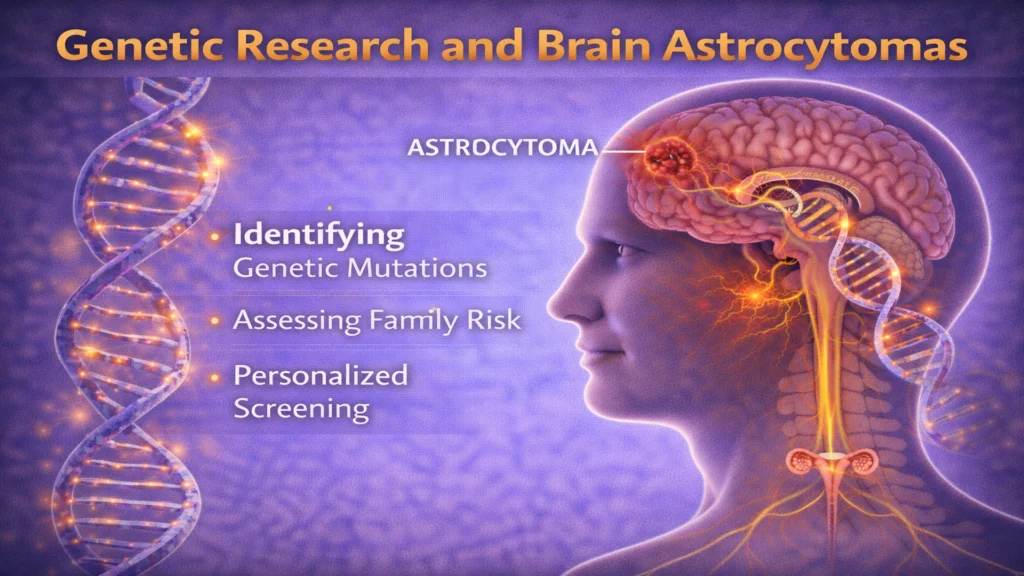
Genetic testing in early detection
Genetic and molecular testing can support early detection by identifying tumor-related changes before significant clinical symptoms develop. When combined with imaging and neurological assessment, these tests improve diagnostic accuracy.
In some cases, genetic markers help distinguish between different tumor types or grades that may appear similar on imaging but behave very differently over time.
Impact on treatment planning
Genetic profiling of astrocytomas helps tailor treatment strategies. Specific molecular features can influence decisions regarding surgery, radiation therapy, and systemic treatment options.
By understanding the tumor’s genetic makeup, clinicians can:
- select the most appropriate treatment approach
- avoid unnecessary or ineffective therapies
- better estimate disease course
This personalized approach improves both safety and outcomes.
Monitoring and long-term follow-up
Genetic information is also valuable during follow-up. Certain genetic profiles are associated with higher risk of recurrence or progression, guiding the frequency and intensity of monitoring.
Long-term management often combines imaging, neurological assessment, and molecular data to provide comprehensive care.
When to consider genetic evaluation
Genetic testing may be recommended if:
- astrocytoma is diagnosed at a young age
- tumor behavior is atypical
- there is a family history of neurological tumors
- precise risk stratification is needed for treatment decisions
The decision to pursue genetic testing is always individualized and discussed with a medical specialist.
FAQ — Genetic Testing and Astrocytoma
It helps identify molecular features that influence tumor behavior, treatment response, and prognosis.
It helps identify molecular features that influence tumor behavior, treatment response, and prognosis.
It cannot prevent tumor formation, but it can help identify risk and support early detection and monitoring.
Most cases are not inherited, but genetic factors may play a role in certain individuals.
No. Genetic testing complements, but does not replace, imaging and histological diagnosis.
No. It is recommended selectively based on clinical context.
Yes. Molecular findings often directly influence treatment planning.


